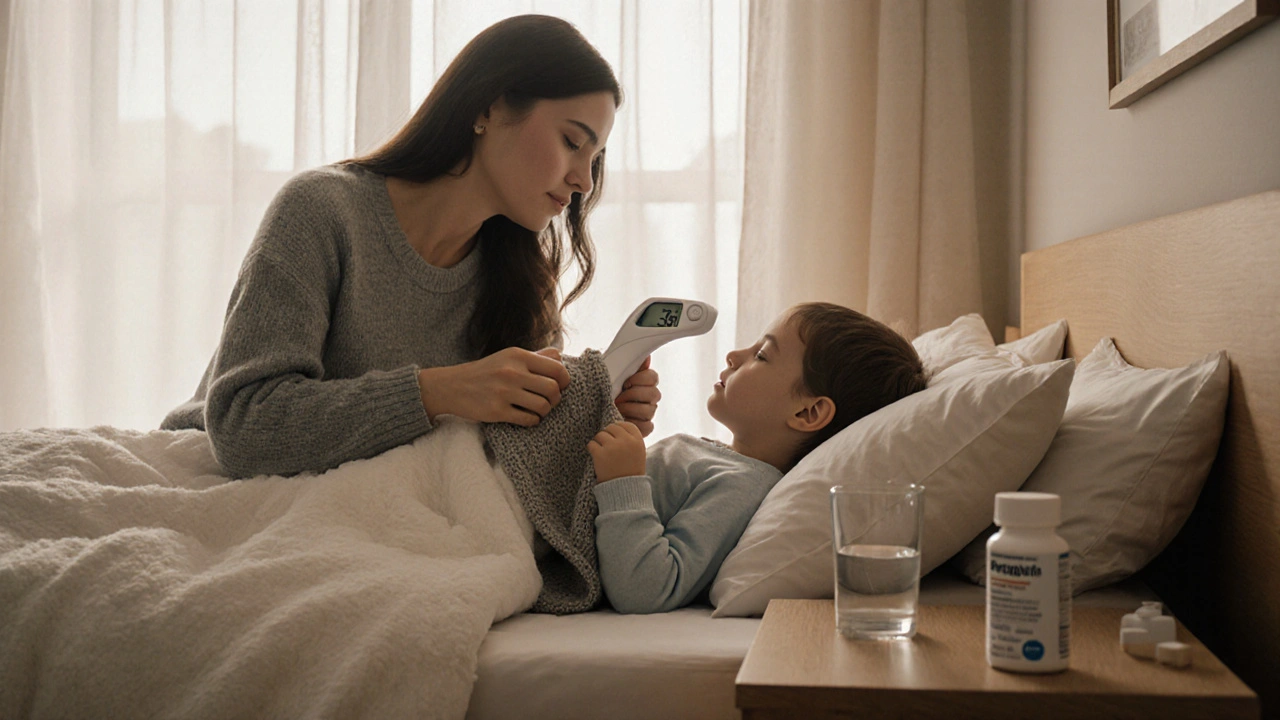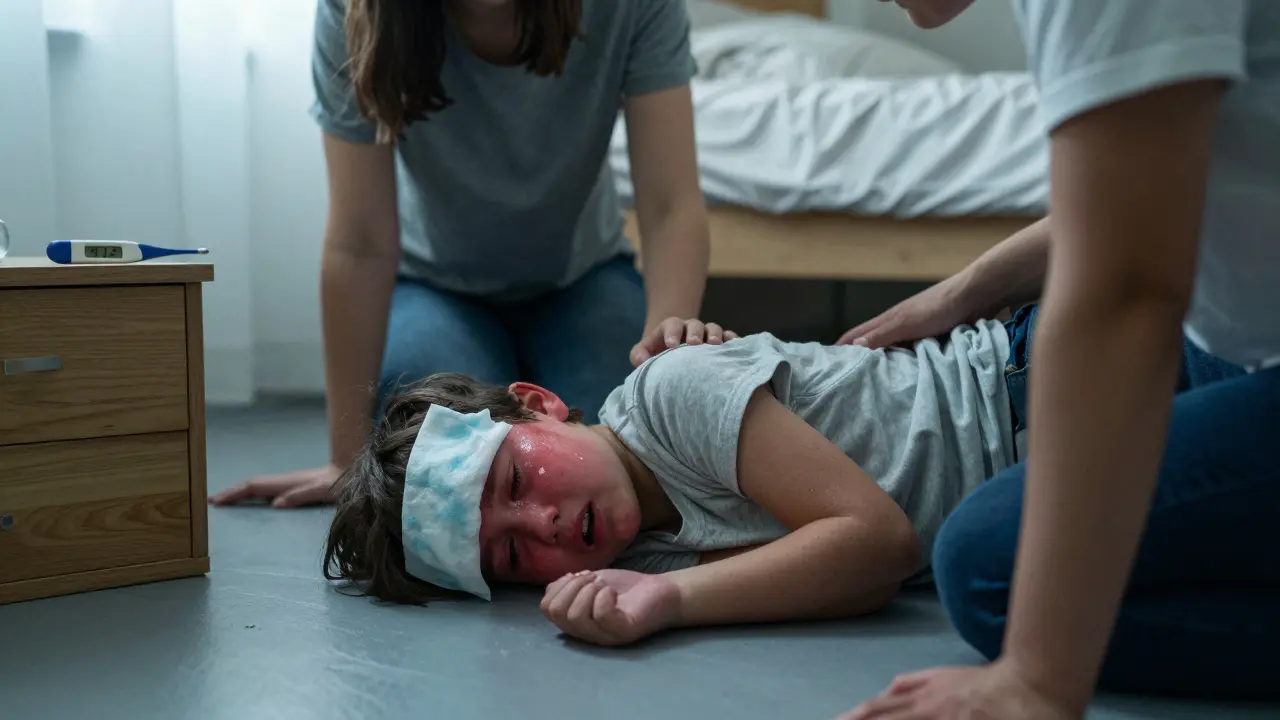

When a child has a vysoká horečka, tělesná reakce na infekci, která signalizuje, že imunitní systém bojuje s virusem nebo bakterií. Also known as teplota nad 38,5 °C, it is not the illness itself — it’s the body’s way of fighting back. Most often, it’s caused by common viruses like those behind the třídenní horečka, běžné virové onemocnění, které začíná náhlou horečkou bez rýmy a končí jemnou vyrážkou po třech dnech, or by throat infections, ear infections, or even teething. The key is not to panic, but to understand what’s happening inside your child’s body.
Many parents rush to give medicine as soon as the thermometer shows 38.8 °C, but that’s not always necessary. A child with a high fever can still play, drink, and be alert — and that’s a good sign. The real danger signs are when the child is lethargic, refuses fluids, has a rash that doesn’t fade when pressed, or has trouble breathing. If the fever stays above 39 °C for more than three days, or if your child is under three months old, it’s time to call the doctor. Don’t wait until they’re delirious or cold to the touch — those are late signals. Brufen, obsahuje ibuprofen a je bezpečný pro děti od šesti měsíců, pokud je podáván ve správné dávce podle hmotnosti works well for reducing fever and easing discomfort. Ibalgin, obsahuje ibuprofen nebo paracetamol, v závislosti na verzi, a je vhodný spíše pro dospělé nebo starší děti — for young children, stick to pediatric formulations. Never mix them or give adult doses. Also, avoid cold baths, alcohol rubs, or overdressing — these can make things worse.
High fever often comes with other symptoms: a rash, swollen glands, or refusal to eat. These aren’t always signs of something serious — they can be part of normal viral infections like the šestá nemoc, infekční erytém, který se projevuje horečkou následovanou jemnou vyrážkou na těle or the pátá nemoc, infekce způsobená parvovirem B19, která je nejvíce nakažlivá před vyrážkou. The fever usually breaks on its own, and the child recovers without antibiotics. But if the fever returns after a few days, or if your child seems worse after seeming better, don’t ignore it — that’s when infections like strep throat or urinary tract infections can sneak in.
You’ll find real-life advice here: how to tell if your child is dehydrated, what to do when they won’t drink, how to use a thermometer correctly, and when to skip the medicine entirely. We’ll cover what works, what doesn’t, and what doctors actually recommend after years of seeing kids with high fevers. No myths. No scare tactics. Just clear, practical steps you can take right now — whether you’re at home, in the car, or waiting at the clinic.