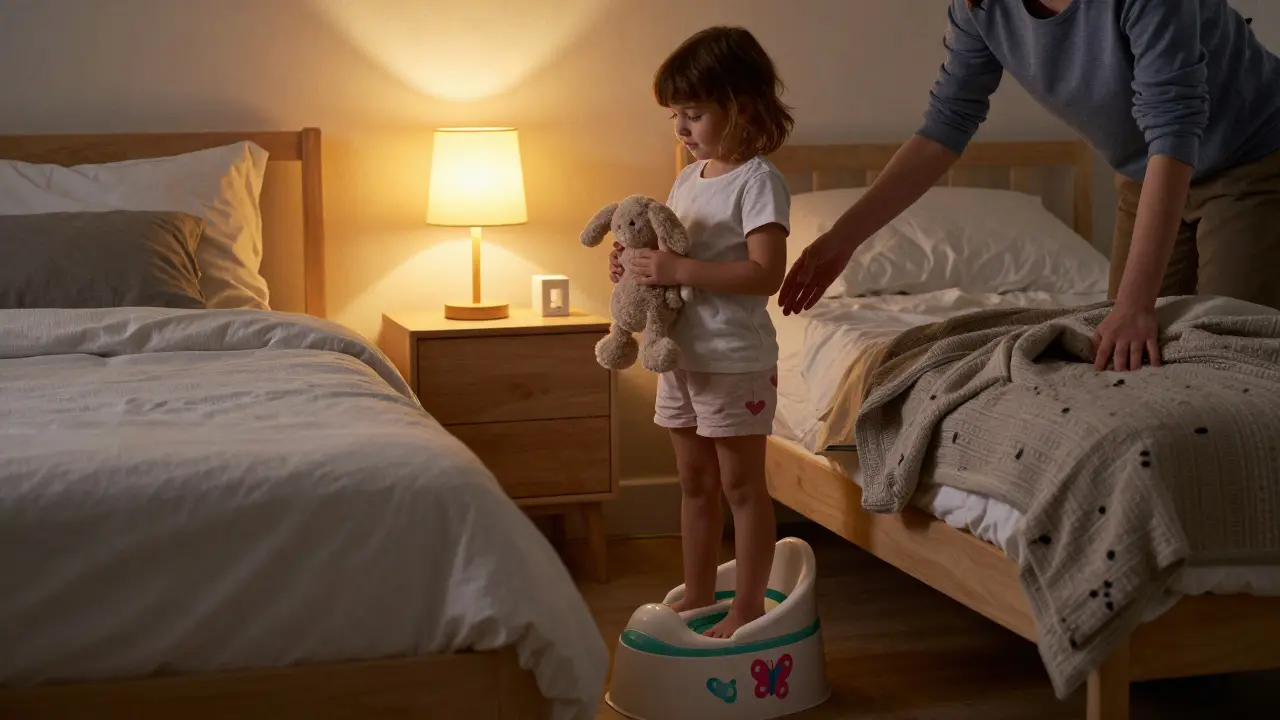

When a child wets the bed, it’s not always a problem — sometimes it’s just part of growing up. dětské močení, proces, kdy dítě močí v posteli, často bez vědomí, běžně v noci. Also known as noční pomočování, it affects up to 15% of five-year-olds and is rarely caused by laziness or disobedience. Many parents worry it’s a sign of something wrong, but in most cases, it’s simply the body taking a little longer to master nighttime control.
One common reason behind persistent nighttime wetting is a hyperaktivní močový měchýř, stav, kdy se močový měchýř příliš často a náhle smršťuje, i když není plný. This isn’t about willpower — it’s a physical reflex that needs gentle management. Simple steps like limiting fluids before bed, avoiding caffeine, and using a moisture alarm can help the bladder learn to hold longer. But if your child suddenly starts wetting the bed after months or years of being dry, that’s a red flag. It could point to something deeper, like a zánět ledvin děti, infekce, která se často projevuje nečekaným nočním močením, horkem a bolestí břicha. Unlike typical bedwetting, this comes with other signs: fever, foul-smelling urine, or pain when peeing. Left untreated, it can damage the kidneys.
Another term you might hear is enuréza, medicínský název pro opakované noční močení u dětí starších pěti let. It’s not a diagnosis — it’s a description. And it doesn’t mean your child is broken. It just means their body needs a little more time or support. Some kids outgrow it by six, others by ten. The key is not to shame, not to punish, and not to rush. But if your child is older than seven and still wetting the bed every night — or if they’ve started wetting after being dry for six months — it’s time to talk to a doctor.
What you see as a messy bedsheet might actually be your child’s body sending a signal. The same way a cough isn’t a disease but a warning, nighttime wetting isn’t the problem — it’s the symptom. And if you’ve noticed a change in frequency, smell, color, or if your child complains of pain, don’t wait. A simple urine test can rule out infection or diabetes. Most of the time, the solution isn’t medicine — it’s understanding, patience, and a few practical adjustments.
In the articles below, you’ll find real, no-nonsense advice from a pediatrician who’s seen hundreds of families dealing with this exact issue. From how to start nighttime training without tears, to spotting the hidden signs of kidney infection, to understanding why your five-year-old still needs pull-ups — everything you need is right here. No myths. No guilt. Just clear, practical help.