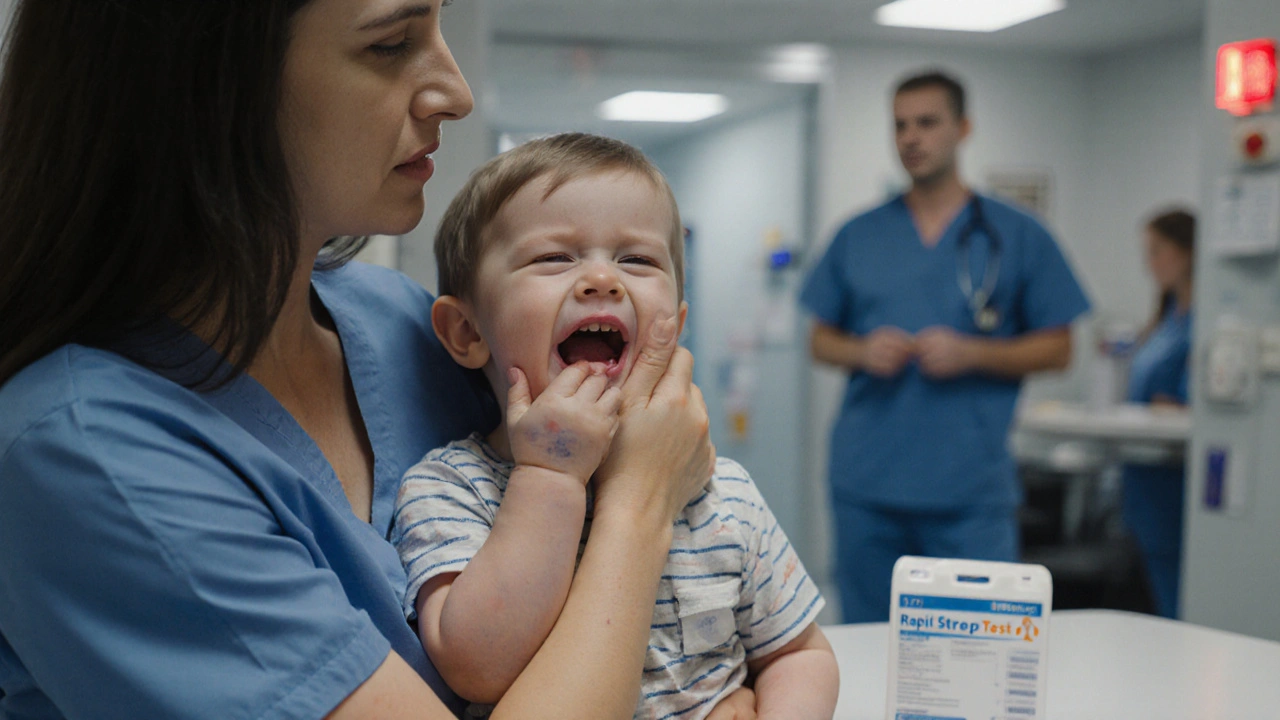

When your child suddenly has a high fever, swollen cheeks, or won’t stop crying at night, you don’t need a manual—you need to know if this is pohotovost, okamžitá lékařská pomoc pro děti v nouzi, která se týká akutních příznaků, jako je vysoká horečka, zánět nebo náhlé změny v chování. Also known as dětská pohotovost, it is the line between waiting it out and rushing to the ER. Many parents panic when their child has a fever over 39°C, but not every high temperature needs an ambulance. The real question is: what’s behind it? Is it just a virus, or could it be something more serious like a kidney infection or a blocked salivary gland?
One common emergency is a swollen cheek—that’s often zánět slinné žlázy, zánět slinné žlázy u dětí, který může být způsoben virovou infekcí jako parotitidou, nebo blokací slinného vývodu. Also known as otok slinné žlázy, it looks scary but isn’t always dangerous. If your child can’t eat, drools more than usual, or has pain when chewing, it’s time to call the pediatrician. But if the swelling is mild and the child still drinks and plays, you might wait until morning. Another frequent reason for late-night panic is noční pomočování, náhlé močení v posteli u dítěte, které dříve bylo sucho, což může být příznakem infekce močových cest nebo jen přechodného vývojového zpoždění. Also known as enuréza, it’s not always an emergency—but if it comes with fever, bad smell, or pain during urination, don’t wait. And then there’s horečka u dětí, vysoká teplota, která trvá déle než tři dny, nebo se objeví bez rýmy, což může signalizovat třídenní horečku, infekci ledvin nebo jinou skrytou nemoc. Also known as třídenní horečka, it’s usually harmless—but when it’s paired with lethargy, refusal to drink, or a rash that doesn’t fade under pressure, it’s a red flag. You don’t need to run to the hospital every time your child has a fever, but you do need to know the signs that mean trouble.
Most emergencies in children aren’t dramatic. They’re quiet: a child who won’t wake up to drink, a baby who hasn’t wet a diaper in 12 hours, a toddler who suddenly refuses to move their arm. These aren’t always obvious to parents who’ve been told "just wait and see." But waiting too long can turn a simple infection into something serious. The goal of pohotovost isn’t to scare you—it’s to help you decide when to act. The posts below give you clear, real-life examples: when to call the doctor after a fever, how to tell if swollen cheeks are harmless or dangerous, why sudden bedwetting might mean a kidney infection, and what to do when your child won’t eat because of a blocked salivary gland. You’ll find no fluff—just what you need to know, when you need it.