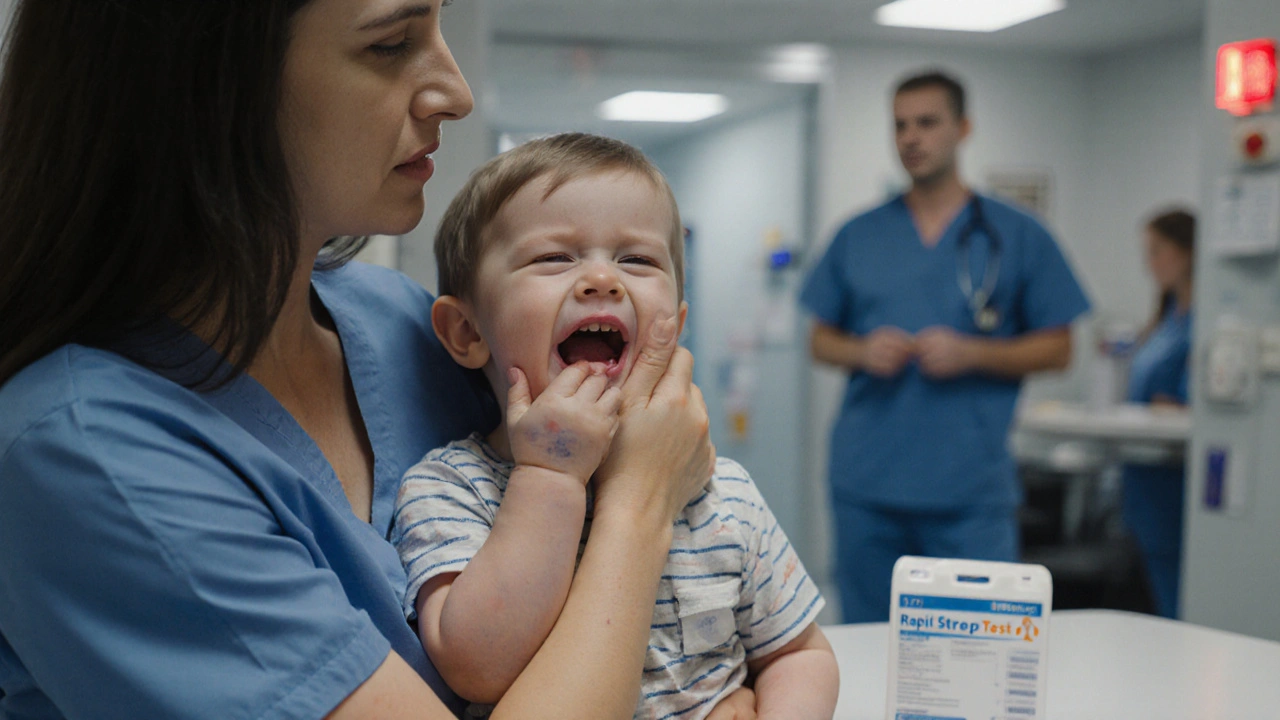

When a child has a sore throat and fever, it’s often angína, zánět hrtanu způsobený virovou nebo bakteriální infekcí. Also known as bolest hrtanu, it’s one of the most common reasons parents bring their kids to the doctor — and one of the most confusing. Most cases aren’t bacterial, and antibiotics won’t help. In fact, over 80 % of angínas in children are viral, meaning the body heals itself in 5–7 days with rest, fluids, and comfort. You don’t need to rush to the pharmacy. You need to understand what’s happening inside your child’s throat.
Many parents panic when their dítě s angínou, má horečku, odmítá jíst a stěžuje si na bolest při polykání. Also known as virová angína, it often looks scary — red tonsils, white spots, swollen glands — but it’s usually harmless. The real danger isn’t the angína itself. It’s mistaking it for something worse, or worse — giving antibiotics when they’re not needed. Antibiotics don’t kill viruses. They just add side effects: diarrhea, rashes, and a higher chance of resistant infections later. Your child doesn’t need a pill. They need you to stay calm, offer cool drinks, soft foods like yogurt or soup, and let them rest. A fever under 39 °C isn’t a crisis — it’s their immune system doing its job.
So when should you worry? If your child is under 1 year old, has trouble breathing, can’t swallow even water, or the fever lasts more than 4 days, see a doctor. If they develop a rash, ear pain, or swollen neck glands that get worse, it might be something else — like strep throat or mononucleosis. But for most kids, angína is just a rough few days. No shots. No pills. Just patience.
And here’s the truth most doctors won’t say out loud: you can treat most angínas at home without antibiotics. The body knows how to fight viruses. Your job isn’t to cure it — it’s to support it. Keep them hydrated. Let them nap. Use saltwater gargles if they’re old enough. Offer ice pops. Don’t force food. Fever and sore throat sap energy — let them recover at their own pace.
Below, you’ll find real stories from other parents who’ve been there: how they handled a child with angína without antibiotics, when they knew it was time to call the doctor, and what actually helped their kid feel better. No fluff. No scare tactics. Just what works.