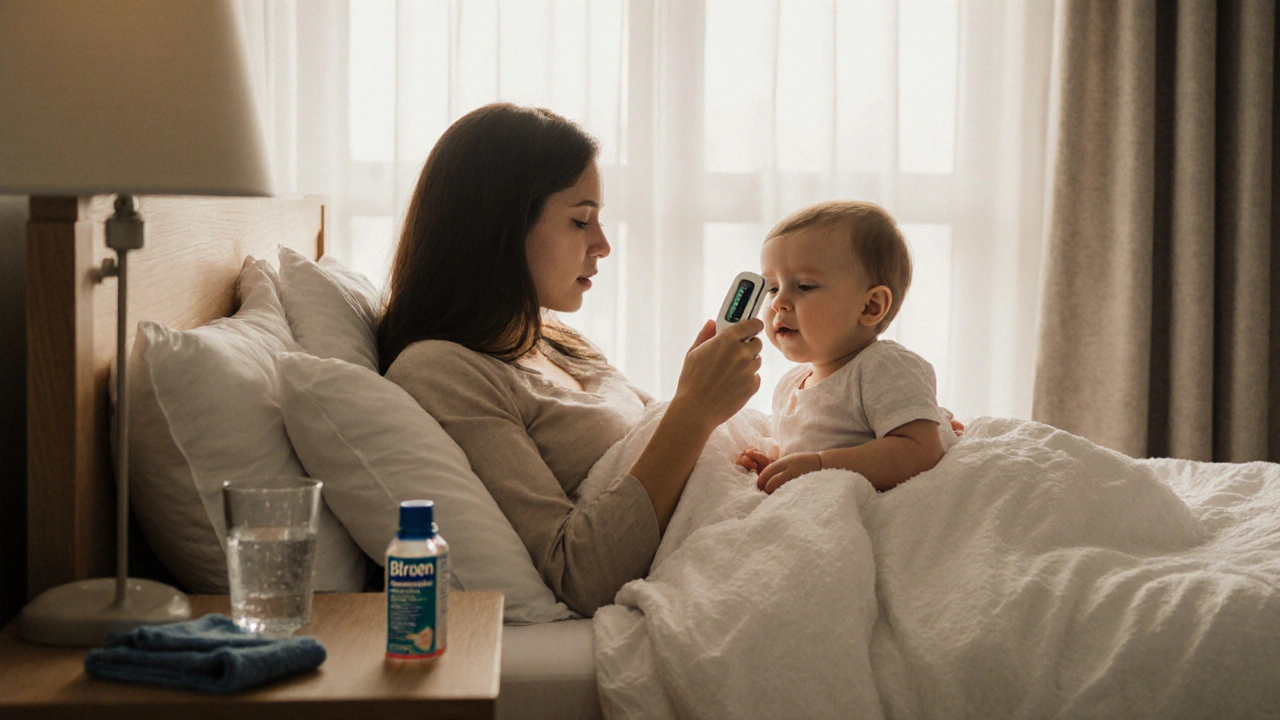

When treating fever or pain in children, Brufen, a common brand of ibuprofen used for reducing fever and relieving pain in children. Also known as ibuprofen, it is one of the two main over-the-counter medications parents reach for when their child has a high temperature or sore throat. But it’s not a magic pill — and giving it blindly can do more harm than good. Many parents think if a child has a fever, they must take something to bring it down. But fever isn’t the enemy. It’s the body’s way of fighting infection. So the real question isn’t whether to give Brufen, but whether your child actually needs it.
Brufen works by reducing inflammation and lowering fever, but it only helps when the child is uncomfortable. If your child has a temperature of 39°C but is playing, drinking, and laughing — you don’t need to give anything. On the other hand, if the fever is 38.2°C but your child is crying, refusing fluids, and can’t sit still, then Brufen might be the right choice. The goal isn’t to normalize the temperature, but to make your child feel better. And that’s where many parents get confused. They see the thermometer and panic. But numbers don’t tell the whole story. Watch your child, not the display.
Brufen is not for every child. It’s not recommended for babies under 3 months, and it’s risky if your child is dehydrated, has kidney problems, or has had an allergic reaction to it before. Also, never give Brufen and paracetamol at the same time unless a doctor tells you to. Many parents alternate them thinking it’s more effective, but that’s not proven — and it increases the chance of dosing errors. One medicine at a time, with correct weight-based doses, is safer and just as effective.
How much should you give? Always check the label. Dose is based on weight, not age. For most children, it’s 10 mg per kilogram of body weight, every 6 to 8 hours. A 15 kg child gets about 150 mg per dose. Don’t guess. Use the measuring spoon or syringe that comes with the bottle. Kitchen spoons are not accurate. And never use adult tablets — they’re too strong and hard to split correctly.
Brufen usually starts working in 20 to 30 minutes, and the effect lasts about 6 to 8 hours. If after 2 hours your child still looks terrible, don’t give more. It might not be the fever causing the distress. Maybe it’s an ear infection, a sore throat, or something else that needs a doctor’s look. And if the fever lasts more than three days, even with Brufen, it’s time to see a doctor. Brufen doesn’t cure infections — it just helps with symptoms.
Some parents worry about side effects. Stomach upset is possible, especially on an empty stomach. That’s why it’s best given with food or milk. Rarely, it can cause allergic reactions — rash, swelling, trouble breathing. If that happens, stop giving it immediately and call emergency services. And remember: Brufen doesn’t prevent fevers from coming back. If the infection is still active, the fever will return. That’s normal. It doesn’t mean the medicine isn’t working.
There are times when you should avoid Brufen entirely. If your child has chickenpox, give paracetamol instead. Brufen can increase the risk of serious skin infections in these cases. Also, if your child has asthma, check with your doctor first — some kids react badly to ibuprofen. And never use it for teething pain unless advised. There are safer ways to soothe gums.
What you’ll find in the posts below are real-life situations parents face: a child with high fever after vaccination, a toddler refusing to drink, a rash appearing after giving Brufen, or a child who still feels awful even after two doses. These aren’t theoretical questions. They’re daily struggles. And each post gives you clear, practical answers — no jargon, no scare tactics, just what works.